Start with the records behind the city's story
Gary's history connects the creation of an industrial city in 1906 with the people who worked, studied, organized families and built institutions there. A useful introduction follows several threads together: company planning, migration, schooling and segregation, labor, public recreation, political representation and the landscape. No single building or photograph can stand in for that whole story.
For a first reading, follow the chronology below, then choose a theme. For a family or building question, go to the research sections and begin with the Gary Public Library's Indiana Room. For the practical details of visiting today's city, use the Indiana guide or Miller Beach visit guide. Historical significance and present-day public access are different enquiries.
Sources reviewed . Dates below describe historical events or records. Current buildings, collections and public services require their own present-day information; this article does not convert an archival description into an opening announcement.
A short chronology with named evidence
| Period or date | What the evidence identifies | Starting source |
|---|---|---|
| 1896 | Chanute's glider experiments included a camp at Millers, within today's Gary. | NPS Chanute biography |
| 1906 | The Gary Land Company Building and the town's incorporation votes belong to the city's founding period. | HABS building record |
| 1912 | Froebel School opened in a growing industrial community. | Indiana historical marker |
| 1919 | A Library of Congress photograph documents a Gary strike leader addressing strikers. | Photograph catalog |
| 1921 | Stewart Settlement House was organized to serve Gary's Black community. | Indiana historical marker |
| 1945–1949 | The Froebel strikes, a local desegregation policy and state legislation mark distinct stages in school history. | Annotated marker account |
| 1967 | Richard Hatcher's election is documented in regional archival descriptions. | Indiana Archives account |
| 1966 and 2019 | The federal dunes designation began as a national lakeshore and later changed to national park. | NPS history overview |
Use the table as an orientation, then read the relevant document. A date can identify a law, a building, an organization or an election; those are different kinds of historical change. Keeping the event type attached to the date helps avoid turning a convenient timeline into an inaccurate claim that everything changed at once.
The industrial founding date is not the beginning of the region
The founding of Gary describes a particular municipality and industrial project. It does not mean the southern Lake Michigan landscape began to have human history in 1906. People, settlements, travel and uses of the lakeshore preceded the new city. A careful account distinguishes the creation of the corporate city from the longer history of the region in which it was built.
The NPS resources for deeper learning include Native American material and a film by Kayla Briët exploring her Prairie Band Potawatomi roots. That is a starting point for expanding a regional reading list, rather than permission to summarize different Indigenous communities as one undifferentiated group.
When developing a local-history project, ask whose records you are using and whose experience may be absent. A company report can document construction while saying little about people outside its administrative purpose. A later commemorative account may celebrate a building without explaining the land's earlier history. Keep those limits visible and seek relevant community and tribal sources when the question requires them.
The sections here concentrate on the documented industrial-city period and connected lakefront stories. They provide a route into the records, not a claim to replace a full account of every community whose history intersects the Calumet region.
Drusilla Carr connects the lakefront with everyday work and land
The National Park Service biography of Drusilla Carr describes her settlement at Miller's lakefront in 1872, the family's fishing work and her long defense of a claim to valuable beachfront land. It connects that story with parts of the area now associated with Marquette Park and Miller Woods.
Read Carr's story as more than a colorful nickname attached to a beach. It raises concrete historical questions: how did a family earn a living, which uses made the shoreline valuable, what kinds of evidence were used to claim land, and how did the area's meaning change as industrial development expanded? Those questions connect personal experience with a wider transformation.
For a family-history enquiry, distinguish an individual's recollection from the later account that reproduces it. Record who spoke, when the recollection was recorded and how the institution presents it. A statement about earlier life can be valuable without being a complete legal account of ownership. Keep the archive reference with any assertion you want to investigate further.
For today's visitor, the relevant next step is to read the documented story alongside the managed public landscape. The Miller Beach guide covers present-day visit planning without treating an old property account as a current access instruction.
Chanute's 1896 experiments belong to a specific lakeshore geography
NPS places Octave Chanute and his assistants at Millers on June 22, 1896, within the present city limits of Gary. The account explains that they used land associated with Carr and later established another camp at Dune Park. The two locations matter: the season's experiments should not all be collapsed into one modern beach address.
The NPS account of the Albatross experiments adds another perspective on the different designs and participants. A group experiment involved more than a single inventor and a single successful machine. Read the names, designs and site descriptions together before attaching a claim to a monument or a modern photograph.
This history gives the lakefront a connection to aviation research, but it is not an account of powered flight taking place in Gary. Be precise about what was tested and when. For a school project, a useful comparison follows how an experiment was documented: design, place, observation and subsequent revision. That question is more informative than reducing the story to a competition over which place can claim aviation's beginning.
1906: a company planned a city as well as a steel works
The City of Gary's overview identifies Elbert Henry Gary, founding chairman of United States Steel Corporation, as the city's namesake. The Historic American Buildings Survey record for the Gary Land Company Building connects the early structure with a U.S. Steel subsidiary responsible for the new city's real-estate, planning and engineering work.
The associated HABS historical report dates construction to April 1906 and records incorporation-related voting there in July. The building also housed the early post office. Those functions make it a useful place to study how a planned industrial settlement became a functioning municipality with land transactions, communications and public decisions.
A planned city should be examined through several types of evidence. A street layout shows a spatial proposal; a company record shows an administrative intention; a directory or household record can show how people actually occupied the place. None substitutes for the others. The distance between a plan and lived experience is one of the most useful questions to ask of Gary's early history.
The Library of Congress catalog identifies the building's later location and notes that it was moved from Broadway. Keep that relocation in mind when comparing a modern map with an early photograph. The building's historical association remains meaningful, while its present position cannot be assumed to reproduce the founding-period arrangement.
Read work and labor alongside industrial construction
A history of steel production needs workers' experiences as well as buildings and machinery. The Library of Congress photograph titled Strike leader at Gary, Ind., advising strikers provides a dated entry into the 1919 labor conflict. Its catalog identifies a place, subject and historical context that a detached copy of the image might lose.
Begin with what that source can establish: a photographed gathering, a described role and a cataloged association. Then ask the next question through other records. What were the workers demanding? How did employers, newspapers and public authorities describe the conflict? Which voices were preserved? A single photograph cannot answer every question about motives, participation or outcomes.
For a research project, compare at least two perspectives on the same episode. Record the publication date, intended audience and institutional position of each source. A company account, a labor publication and a government document may focus on different parts of the story. Differences are evidence to investigate, rather than a reason to silently select whichever version sounds most complete.
Keep historical employment conditions separate from today's employer information. A record of a mill's workforce or benefits at one date is evidence about that period. It is not a current hiring announcement, wage description or access invitation to an industrial site.
Stewart Settlement House makes migration visible at neighborhood scale
The Indiana Historical Bureau's Stewart Settlement House marker dates its organization to 1921. It describes services for Gary's Black community, including southern migrants and unemployed First World War veterans. Lodging, meals and practical advice helped people negotiate urban life; the marker also identifies funding from multiple sources and leadership by the Reverend Frank Delaney.
This is a concrete way to approach migration. Moving to an industrial city meant finding shelter, work, information and social connections. The existence of a settlement house shows that those needs generated institutions and collective responses. It also invites questions about the people who ran services, the organizations that funded them and the conditions that made help necessary.
For a family connection, begin with a name, approximate date and known address rather than assuming every migrant used the same institution. A community organization can provide context even when a particular person's involvement has not been documented. Label the difference between a verified family record and a wider account of the neighborhood.
The Bureau's marker-dedication account is useful for understanding how the institution has been remembered publicly. A commemoration is another historical layer, with its own date and participants, rather than a replacement for the earlier records.
Schools reveal both progressive ambitions and exclusion
Froebel School's annotated state marker records its opening in 1912 and its place in progressive education. It also describes unequal access for Black pupils, the white-student strikes of 1945, a Gary desegregation policy in 1946 and Indiana legislation in 1949. These are related stages, not a single moment when every form of discrimination ended.
The Gary Roosevelt High School marker adds the history of a school shaped by segregation and community determination. The Bureau explains that many community members opposed segregation while taking pride in Roosevelt and working to make its opportunities equal to those at white schools.
Those accounts should be read together. Institutional pride does not imply approval of the unequal system that made a separate institution necessary. A progressive educational reputation does not establish equal experience for all pupils. Keeping both points in view produces a more faithful account than choosing either celebration or condemnation as the entire story.
For a school-history enquiry, distinguish the building, the institution, its student body and its legal status. These can change on different dates. A yearbook, an administrative report and an alumni recollection may each address a different aspect. Record which question a source answers before using it to describe the whole school or an entire period.
Company-sponsored recreation extended beyond the workplace
The NPS history of Good Fellow Club Youth Camp describes a camp operated by the Gary Works Good Fellow Club from 1941 to 1976. It connects outdoor recreation for employees' children with U.S. Steel's wider labor-management and welfare activity. The camp was a regional destination, rather than a facility to place automatically inside Gary's municipal boundary.
The account also records unequal racial arrangements within the summer program. Its value is in connecting an attractive recreational landscape with the social rules under which it operated. A camp photograph alone might preserve an enjoyable experience without making those arrangements visible.
For an institutional history, ask what a benefit was meant to do, who could use it and how access was organized. Employer support can be examined alongside the company's interest in retaining workers and shaping public reputation. The same source can contain evidence of meaningful experiences for participants and limits imposed by the institution.
Use this regional connection to broaden a Gary history project carefully. Keep the organization's Gary association, the camp's location and the dates separate. A story about workers' families can extend beyond city limits while still requiring accurate geography.
Public recreation produced its own buildings and landmarks
The city's Marquette Park account identifies the Pavilion's design by George W. Maher in 1921, the Father Marquette monument and Patterson Island's Depression-era construction. The named features offer several routes into the history of civic recreation: architecture, commemoration, landscaping and the creation of places for public gathering.
Keep design, construction, dedication and restoration dates separate when researching a building. An online photograph's caption may use one of those dates while another source uses a different event. Before treating the difference as an error, identify what each date describes. This is especially useful when a venue's history spans several periods of alteration and public use.
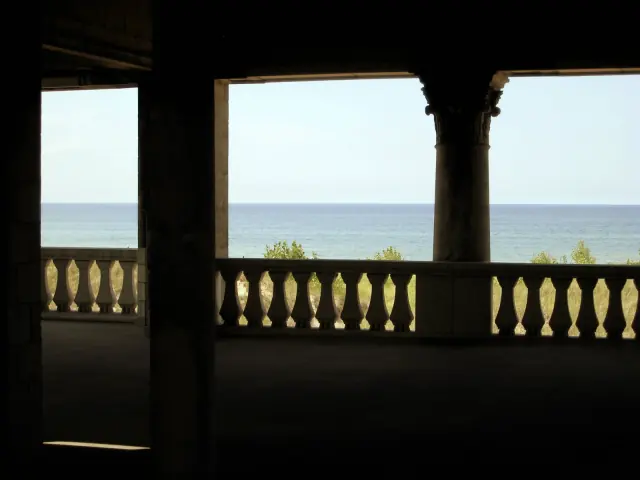
The Pavilion and Aquatorium should also remain distinct in a research note. A photograph of a colonnade, a park map and an architectural description may refer to different structures. Record the building name and view direction with an image so it can be compared accurately with a later visit or another archive item.
For practical access, use the venue's current information. A building's public historical significance does not establish that every interior is open or that an event is public. The historical record and the present visitor arrangement each have their own responsible source.
Political representation belongs in the city's chronology
An Indiana Archives account of regional collections describes Richard Hatcher's 1967 election victory and identifies materials documenting local civil-rights work and the Hatcher era. It connects later political representation with earlier organizing rather than presenting an election as an event without a preceding community history.
The Indiana University profile of Katherine C. Lazerwitz also identifies her involvement in the successful 1967 campaign. That institutional record provides a specific route into the participation of campaign organizers and volunteers. It shows why a political history should include the people whose work supported a candidate as well as the officeholder's biography.
When researching elections, distinguish the campaign, election, inauguration and period in office. A document dated the following year may concern an inauguration rather than contradicting an election date. Record the event type with the year and consult the relevant record before combining accounts.
For a neighborhood or family project, ask whether campaign material, organizational records or oral histories can document a specific person's role. A general political narrative can supply context, but individual participation needs its own evidence. The archives' collection descriptions help identify where that search might begin.
Gary's musical connections deserve specific records
The Jackson 5 are a prominent example of Gary's connection to national cultural history. The Rock and Roll Hall of Fame archive's Jackson 5 collection description identifies the group's Gary origins. Its record also describes a particular donated photograph and gives the terms under which researchers can consult the collection.
A collection record is useful because it distinguishes the group's general history from the identity of one object. The photographer, date range, donor and original item's location can all matter. A photograph associated with a Gary-origin artist may have been made in another city; a connection to the person does not establish a connection to the pictured street or venue.
For a music-history project, choose a manageable question: an early performance, a recording, a particular publicity image or an artist's local institution. Then follow the relevant archive or museum record. Broader fame can explain why the subject matters, while the specific record establishes what the project can actually demonstrate.
Keep visits and image reuse separate from that research. A famous association does not establish public entry to a home or permission to reproduce a photograph. Use the current property or institution information for access and the item's rights statement for reuse.
The dunes' protected status has its own timeline
The NPS history overview records the authorization of Indiana Dunes National Lakeshore in 1966 and the change to Indiana Dunes National Park in 2019. It also places those decisions within a longer preservation movement. The current name therefore should not be projected backwards onto every historical document without explanation.
When a source says national lakeshore, identify its date before assuming it refers to a different landscape. Likewise, the national park and Indiana Dunes State Park have distinct institutional histories. Keep the manager and designation with a reference, particularly when comparing laws, maps or public-recreation accounts.
Conservation history also gives context to the coexistence of industry, settlements and protected habitats along southern Lake Michigan. A modern visitor can encounter several of those landscapes within a wider region, but each site has a particular history of ownership and management. Read the relevant record rather than treating the entire shoreline as one continuous park project.
For current outdoor planning, use the Miller Beach guide and the manager's present information. Historical protection is part of understanding the place; it is not a substitute for a current trail map, entrance or facility description.
Environmental records explain another dimension of industrial history
The EPA Grand Calumet River Area of Concern resource describes an environmental-management geography connected with the industrial region. Its project information distinguishes particular remediation and restoration work. Use those named areas and projects when reading the environmental legacy of industrial development.
A designation, an investigation, an agreement and completed work are different statuses. Record the status and date stated by the responsible agency. An announcement that a project will be studied does not establish that all work is complete; a completed project in one reach does not describe every nearby place.
This distinction helps keep local history accurate without turning it into unsupported present-day health or property advice. The historical existence of an industrial site does not by itself determine conditions at a particular address today. An individual environmental question needs the relevant current agency or property-specific information.
For an historical project, the useful questions include how public concern was documented, which organizations acted and how the description of the problem changed over time. Keep the original report or agency reference with each claim so a later reader can distinguish the history of a decision from the present status of a place.
Use the Indiana Room for a focused research question
Gary Public Library's Indiana Room describes holdings that include books, maps, newspapers, clippings, photographs, blueprints, government documents and yearbooks. Those formats support different questions. A yearbook may help identify a school community; a map may help locate a street; a government document may describe an administrative decision.
State the question before requesting material. Give the person's name or building, an approximate period, a known address and the detail you want to establish. Tell staff what you have already consulted. A narrow question makes it easier to identify the right collection than an undirected request for everything about the city.
Use the library's visit guidance and appointment instructions for the current enquiry route. Ordinary branch opening and special-collection access are different arrangements. Confirm the materials and access before making a research journey.
While working, capture the collection name, item identifier, title, creator, date and the part you consulted. Preserve that reference when writing up the result. It allows another reader, or your future self, to return to the evidence instead of relying on a screenshot whose source has been lost.
Use a newspaper index as a route to an article
The library's WPA Index Archives page provides a starting point for locating local-history material and explains how to request articles associated with subject headings. An index entry helps you find a record; the actual article supplies the text, date and context you will need to evaluate it.
The library dates the indexing project from May 1937 to April 1942 and reports more than 638,000 entries from ten newspapers covering 1906–1939. It describes an alphabetical last-name section and a subject-heading section. Those boundaries are useful search information: a later event needs another source, while a person may be found through a different route from an organization or topic. The historical dates describe the index project and its coverage, not the opening period of the library service today.
Try more than one form of a search term. A building may appear under its original name, later occupant or street address. A person may be listed with initials or a spelling variation. Keep track of the versions tried so that an unsuccessful search is useful information rather than a reason to repeat the same attempt.
Once you obtain an article, distinguish reporting from opinion, an advertisement or a letter. Record the publication and page. If the article describes a claim made by someone else, retain that attribution instead of presenting the claim as an independently established fact. A contemporary source can be valuable and still require careful reading.
For a disputed event, compare coverage across dates or publications where material is available. Later reporting may correct an early account or reveal what happened after an initial announcement. A single clipping is often the beginning of a question rather than the final answer.
Read a historical photograph in three passes
First: identify the record
Record the institution, item title, creator if known, date or date range, and identifier. The Gary Land Company Building catalog record illustrates how a record can connect images with a named building, a survey and historical documentation. Keep the catalog link as well as any downloaded image.
Second: describe what is visible
Write a short description before deciding what the image means. Identify visible structures, signs, people or activities without guessing at names or intentions. Note the limits of the frame. A view of one street frontage does not show an entire neighborhood, and an image of a gathering does not establish what every participant believed.
Third: test the interpretation
Compare the photograph with another record that addresses the question: a map for location, a directory for an occupant, an administrative record for a formal decision or a dated article for an event. Explain which part of the conclusion comes from each source. If the evidence supports only a narrower claim, keep that narrower claim. This produces a history that readers can check without making the photograph carry more certainty than it contains.
Three useful ways to build your own Gary history project
A building or street
Start with the full name or address and one period. Find a map, a photograph or a building record, then identify the change you want to explain. Was the building moved, renamed or used differently? Keep those possibilities separate until the evidence supports a connection. A modern address is a locating tool; it does not automatically identify a historic parcel or institution.
A family connection
Begin with the information you can document: names, approximate dates, household relationships and known addresses. Add context from school, employment or community-organization records without assuming a particular relative participated in every institution nearby. Record uncertainty clearly, and keep private information about living people out of a publicly shared family account unless its use is appropriate and agreed.
A community institution
Select one organization and ask what it did, who used it and how it changed. Compare its own records with material from participants or other institutions. A commemorative anniversary account may identify useful leads, while contemporary records can establish what happened at a particular time. Let the question determine the sources rather than collecting material solely because it contains the name Gary.
For each project, end with a short evidence table: claim, source, date, exact reference and unresolved question. That table helps separate a well-supported conclusion from a plausible next lead. It also makes a later correction straightforward because the reasoning can be traced to a specific record.
Questions about Gary's history
When was Gary founded?
The city's founding period is 1906. The HABS Gary Land Company Building record documents construction and incorporation-related events in that year. That is the industrial-city date, not the beginning of all human history in the region.
Who was the city named after?
The municipality identifies Elbert Henry Gary, founding chairman of United States Steel Corporation, as its namesake.
Did Chanute test gliders in today's Gary?
NPS places his first 1896 camp at Millers within today's city limits, and distinguishes it from a later camp elsewhere along the dunes.
Where should a local-history research visit start?
Contact the Gary Public Library's Indiana Room with a specific question and known dates or addresses, then confirm the current research arrangement and relevant material.
Can a historic building be visited simply because it is documented?
No. Use the present manager or property information for public access. An archival record establishes historical evidence, not an invitation to enter.